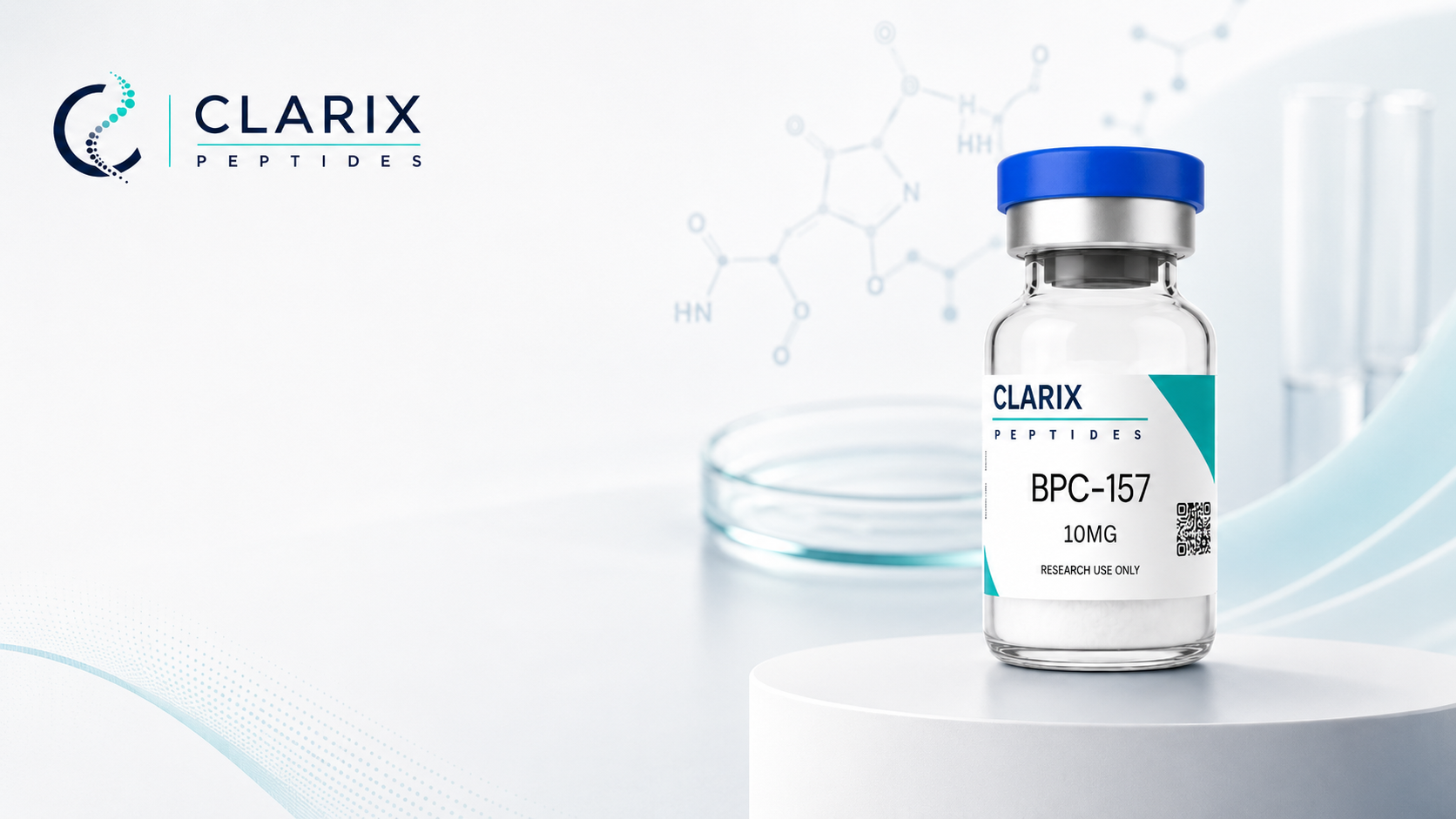
BPC-157: A Comprehensive Research Overview
Body Protection Compound 157 is one of the most extensively researched synthetic peptides available today. This overview covers the compound's structure, primary research areas, and what researchers should know before working with it.
Read Article Research Guide
Retatrutide UK: How Researchers Source the Compound
Retatrutide is a triple GLP-1/GIP/glucagon agonist that drew widespread attention after Phase 2 data showed up to 24% body weight reduction. This guide covers UK sourcing and quality criteria.
 Research Guide
Retatrutide Dosage: Starting Doses and Titration Schedules
A breakdown of the Phase 2 dosing data: starting doses, weekly titration steps, and the dose-response outcomes observed across the 1mg, 4mg, 8mg and 12mg groups.
 Research Guide
Retatrutide Side Effects: What the Research Shows
A summary of adverse events from the Phase 2 trial: GI tolerability, dose-dependency, fat loss mechanisms, and what is known about long-term safety so far.
 Research Guide
Tesamorelin UK: Understanding This GHRH Peptide
Tesamorelin is the only synthetic GHRH analogue to have reached clinical approval. This guide covers its mechanism, documented benefits, dosage data, and UK sourcing.
 Research Guide
Bacteriostatic Water for Peptides: Complete Guide
What bac water is, why it is used instead of sterile water, correct reconstitution technique, and how to store reconstituted peptide solutions safely.
 Research Guide
Peptides for Muscle Growth: The Research Landscape
An overview of the peptides most studied in relation to muscle growth and tissue recovery: CJC-1295, tesamorelin, TB-500, BPC-157 and GHK-Cu.
 Research Guide
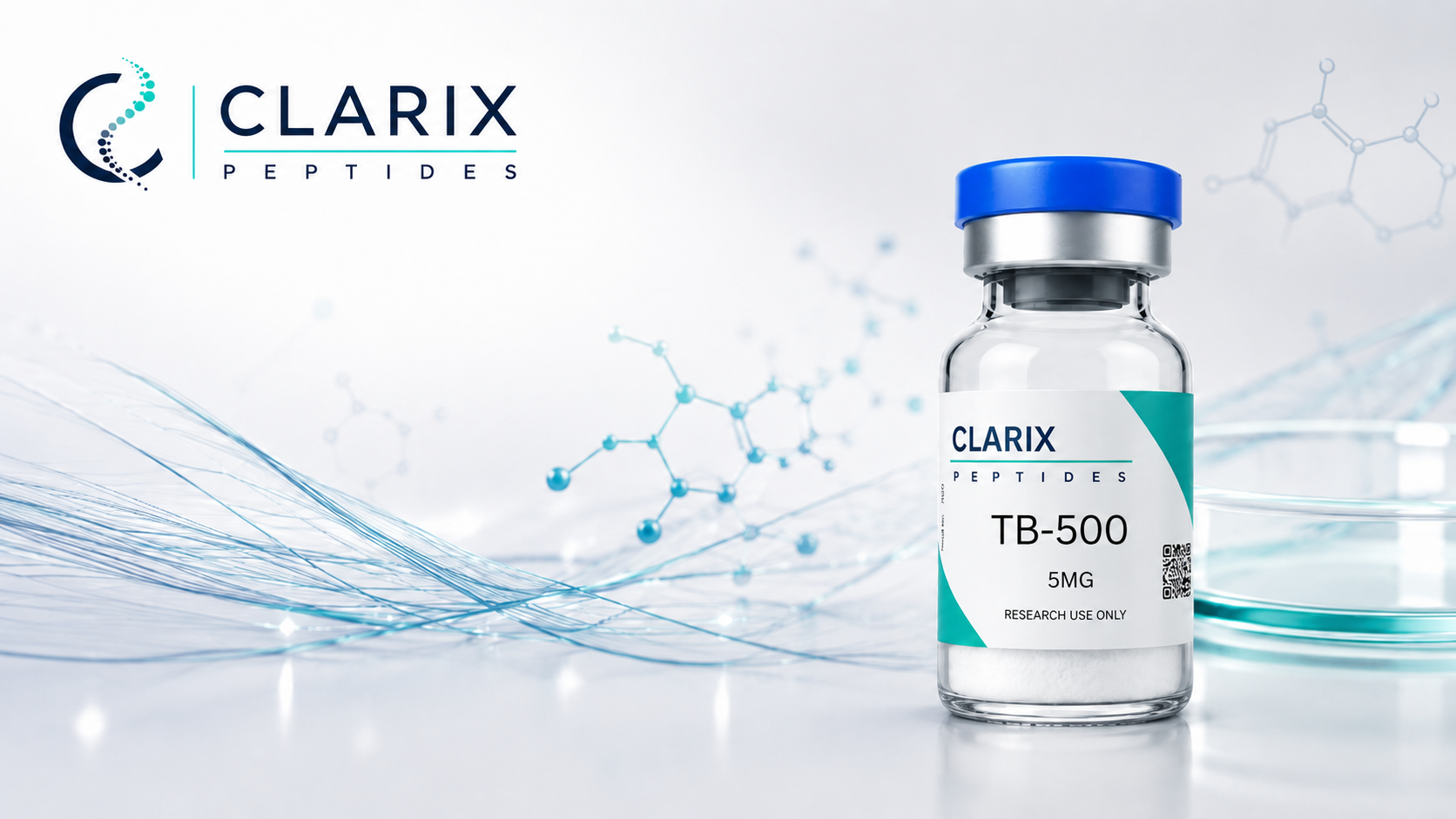
TB-500: Thymosin Beta-4 Research and Tissue Repair
A detailed look at TB-500 including its mechanism of action, actin-binding properties, and the research areas where it has received the most attention.
 Research Guide
GHK-Cu Copper Peptide: Tissue Remodelling Research
GHK-Cu is a naturally occurring copper complex found in human plasma. This article covers what the research says about its role in collagen synthesis and cellular signalling.
 Research Guide
Melanotan II: Understanding Melanocortin Research
Melanotan II is a synthetic analogue of alpha-MSH with activity across the melanocortin receptor family. Here is what the science looks like and how researchers approach it.
Comparison
Retatrutide vs Semaglutide: Mechanism and Research Comparison
How does the triple GLP-1/GIP/glucagon agonist retatrutide compare to the single GLP-1 agonist semaglutide? A look at receptor targets, Phase 2 efficacy data, and research implications.
Comparison
BPC-157 vs TB-500: Comparing Two Repair Peptides in Research
BPC-157 and TB-500 are both studied for tissue repair but work through distinct mechanisms. This guide breaks down the origins, receptor activity, and typical research applications of each.
Research Guide
CJC-1295 With DAC vs Without DAC: What Researchers Need to Know
The Drug Affinity Complex (DAC) changes CJC-1295's half-life from 30 minutes to around 8 days. This article explains what that means for GH pulse research and how to choose between the two forms.
Research Guide
Peptide Stacks for Research: Common Combinations Studied
An overview of the peptide combinations most studied in laboratory settings — including GHRH/GHRP synergy, BPC-157 and TB-500 co-administration models, and GHK-Cu in tissue panels.
Comparison
Tesamorelin vs Ipamorelin: Comparing GHRH and GHRP Research Tools
Tesamorelin acts on the GHRH receptor while ipamorelin acts on the ghrelin receptor — two different upstream points in the GH axis. This guide explains the differences and why researchers use each.
UK Legal
Are Research Peptides Legal in the UK? A Complete Guide
Research peptides occupy a specific legal category in the UK, separate from controlled drugs and licensed medicines. This guide covers the MHRA framework, Misuse of Drugs Act, and what "research use only" means legally.