Retatrutide has become one of the most discussed research peptides of the past few years. Following the publication of its Phase 2 trial results in the New England Journal of Medicine in 2023, demand for the compound within the research community grew sharply. For researchers in the UK seeking to work with retatrutide, this guide covers the compound's mechanism, the current UK sourcing landscape, and what quality criteria to look for when selecting a supplier.
What Is Retatrutide?
Retatrutide (LY3437943) is a synthetic peptide developed by Eli Lilly. It is classified as a triple agonist, targeting three receptors simultaneously: the glucagon-like peptide 1 receptor (GLP-1R), the glucose-dependent insulinotropic polypeptide receptor (GIPR), and the glucagon receptor (GCGR). This triple mechanism distinguishes it from earlier generation compounds such as semaglutide (GLP-1 single agonist) and tirzepatide (GLP-1/GIP dual agonist).
The compound's engagement of the glucagon receptor is of particular scientific interest. Glucagon receptor agonism increases hepatic glucose output and thermogenesis, and researchers have proposed this as the mechanism responsible for the enhanced weight loss signals observed relative to dual agonists. The Phase 2 data published in 2023 reported mean body weight reductions of up to 24.2% over 48 weeks at the highest dose studied, a figure that attracted significant attention across metabolic research.
Retatrutide UK: The Research Landscape
Retatrutide is not currently licensed as a medicine in the United Kingdom and is not approved for prescription by the MHRA. As of mid-2026, it remains in later-stage clinical development. Within the research community, it is available as a research-grade peptide compound, which is legally distinct from a medicinal product in the UK context. Research compounds are supplied for in-vitro and laboratory research purposes only and are not intended for human administration.
For those investigating how to get retatrutide or where to source it for laboratory work, the UK has a small number of specialist research peptide suppliers. The key criteria when evaluating a retatrutide peptide UK supplier are purity verification, documentation, and batch traceability. The compound's structural complexity makes purity particularly important; incomplete synthesis or degradation can produce truncated analogues that affect experimental outcomes.
Where to Buy Retatrutide UK: Quality Considerations
HPLC Purity Verification
High-performance liquid chromatography (HPLC) is the standard method for verifying peptide purity. Research-grade retatrutide should carry HPLC results showing purity above 98%, ideally above 99%. This testing should be conducted by an accredited third-party laboratory rather than in-house, to ensure independence. Suppliers offering retatrutide online without third-party documentation should be treated with caution.
Mass Spectrometry Identity Confirmation
Because retatrutide is a larger and more complex peptide than many commonly researched compounds, mass spectrometry confirmation of the molecular weight is an important secondary check. The correct molecular weight confirms the peptide sequence is complete and has not been truncated during synthesis.
Certificate of Analysis
A Certificate of Analysis (COA) from an accredited laboratory should accompany every batch. The COA should state the compound name, batch number, purity result, testing method, testing date, and the identity of the laboratory. When you buy retatrutide UK from Clarix Peptides, a batch-specific COA is included with every order.
Storage and Dispatch
Lyophilised retatrutide is relatively stable at room temperature for short periods but degrades meaningfully if stored above 25°C for extended durations. Reputable UK suppliers dispatch within the UK to minimise transit time and temperature exposure. UK-based stock avoids the delays and temperature excursions associated with international customs clearance.
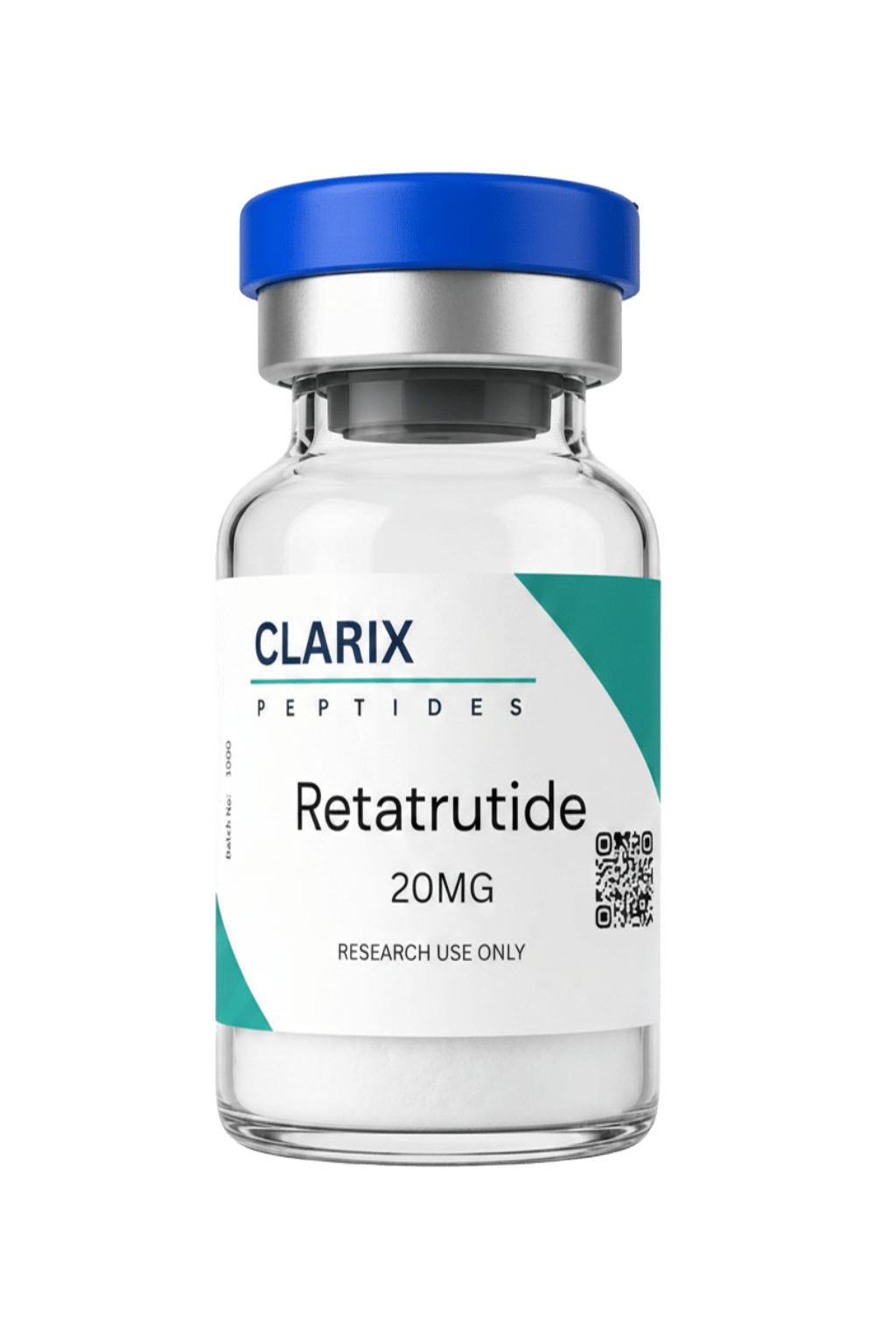
Retatrutide Available from Clarix Peptides UK
HPLC-verified, 99%+ purity. COA included. Available in 10mg and 20mg. Same-day UK dispatch on orders before 2pm.
Reconstitution and Handling
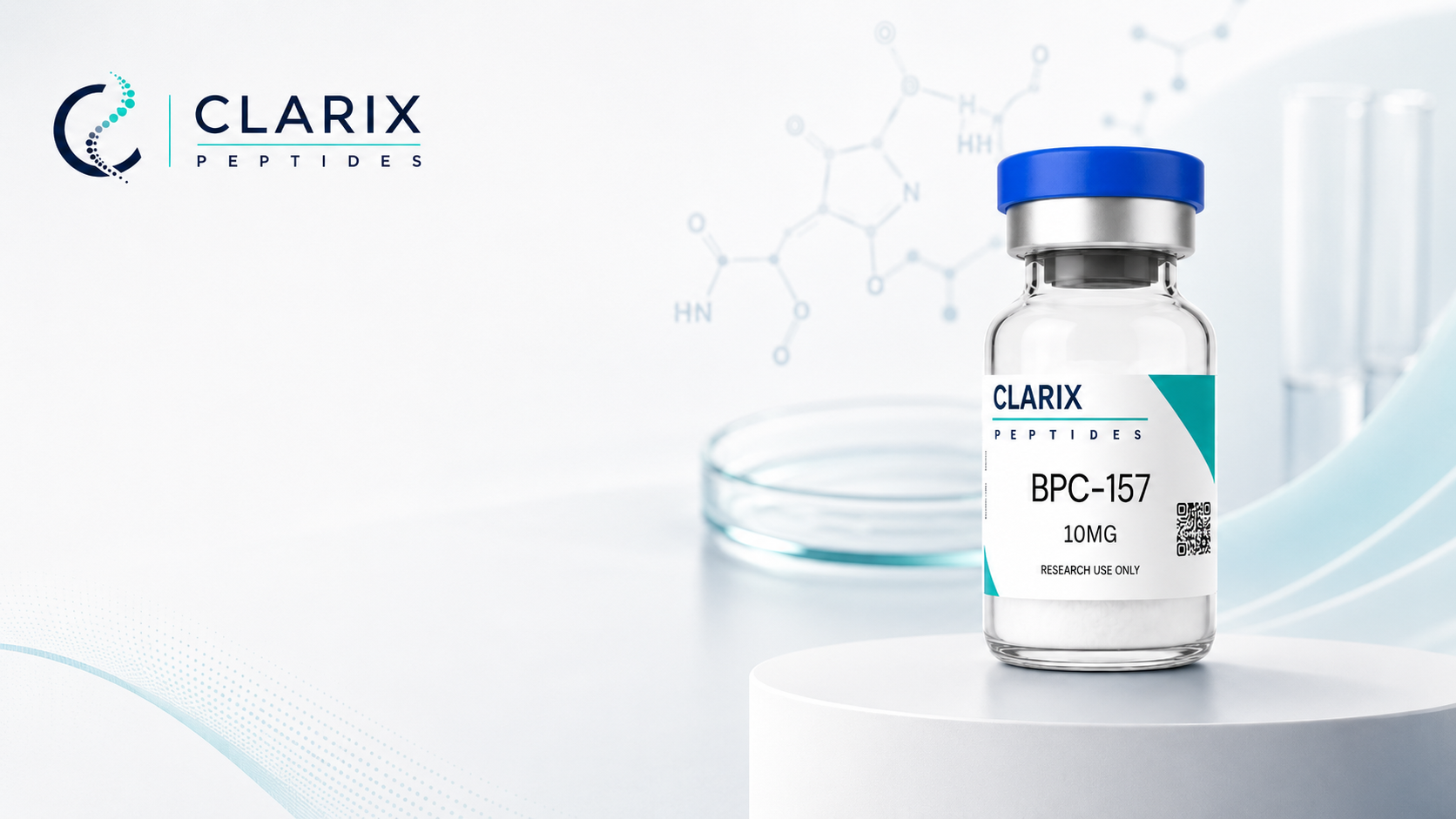
Retatrutide is supplied as a lyophilised white powder in sealed vials. For laboratory use, it is typically reconstituted using bacteriostatic water or sterile saline. The standard reconstitution approach involves adding the solvent slowly down the side of the vial to avoid mechanical disruption to the peptide structure. Solutions should be swirled gently rather than shaken.
Once reconstituted, solutions should be stored at 4 degrees Celsius and used within 28 days. Freeze-thaw cycles degrade the reconstituted compound and should be avoided. For long-term storage of the lyophilised powder, minus 20 degrees Celsius is recommended.
Frequently Asked Questions
Is retatrutide available to buy in the UK?
Yes. Retatrutide peptide UK is available from specialist research peptide suppliers including Clarix Peptides. It is supplied strictly for research purposes and is not approved for human use.
How does retatrutide differ from semaglutide?
Semaglutide is a single GLP-1 receptor agonist. Retatrutide is a triple agonist, additionally targeting GIP and glucagon receptors. The triple mechanism is believed to account for the stronger metabolic signals observed in Phase 2 data.