Melanotan II is a synthetic peptide that has occupied a significant position in melanocortin receptor research for more than three decades. Originally developed at the University of Arizona in the 1980s as part of a programme investigating skin pigmentation pathways, it has since been studied across a wide range of biological contexts due to its broad activity across the melanocortin receptor family. This overview covers the compound's structure, receptor pharmacology, and the primary research areas where it has been applied.
What Is Melanotan II?
Melanotan II (MT-II) is a synthetic cyclic heptapeptide analogue of alpha-melanocyte stimulating hormone (alpha-MSH), a naturally occurring peptide derived from the proopiomelanocortin (POMC) precursor protein. Its molecular formula is C50H69N15O9 with a molecular weight of approximately 1024.2 Da. Unlike linear alpha-MSH, MT-II features a lactam bridge that creates a cyclic structure, conferring greater metabolic stability and potency at the melanocortin receptors compared to the native peptide.
The compound is a non-selective agonist at the five known melanocortin receptors (MC1R through MC5R), with particular affinity for MC1R, MC3R, and MC4R. This broad receptor activity has made it a valuable tool compound in research programmes examining the physiological roles of the melanocortin system.
Melanocortin Receptors and Research Areas
MC1R and Pigmentation Biology
MC1R is the primary receptor mediating melanogenesis — the production of melanin pigments in melanocytes. Activation of MC1R by alpha-MSH or its analogues such as MT-II stimulates the production of eumelanin (brown/black pigment) over phaeomelanin (red/yellow pigment) through cAMP-mediated signalling cascades. Research into MC1R activation has implications for understanding sun protection biology, pigmentation disorders, and UV-induced DNA damage responses in the skin. MT-II's potency and stability have made it a practical tool compound for in vitro melanocyte studies.
MC3R and MC4R in Energy Homeostasis Research
The MC3R and MC4R subtypes are expressed in the central nervous system, particularly in hypothalamic nuclei involved in energy balance regulation. Research into these receptor subtypes has examined their roles in appetite signalling, energy expenditure, and body weight regulation. MT-II's activity at both receptors has made it a widely used pharmacological tool in pre-clinical studies examining feeding behaviour and metabolic regulation. Its ability to cross the blood-brain barrier in animal models has made in vivo CNS studies feasible.
MC4R and Cardiovascular Research
A distinct area of interest has been the role of MC4R signalling in cardiovascular physiology. Studies have examined the effects of MC4R activation on heart rate, blood pressure regulation, and autonomic nervous system tone. MT-II's activity at MC4R has made it a useful tool compound in these investigations, with research documenting effects on natriuresis and sympathetic tone that are separate from its metabolic activities.

Neuropeptide and Central Nervous System Studies
The melanocortin system has broad implications in neuropeptide research beyond energy homeostasis. MC3R and MC4R are expressed across multiple brain regions involved in mood, cognition, and neuroendocrine regulation. Studies have used MT-II as a pharmacological probe to investigate the downstream effects of melanocortin activation in various CNS models, contributing to a broader understanding of neuropeptide signalling networks.

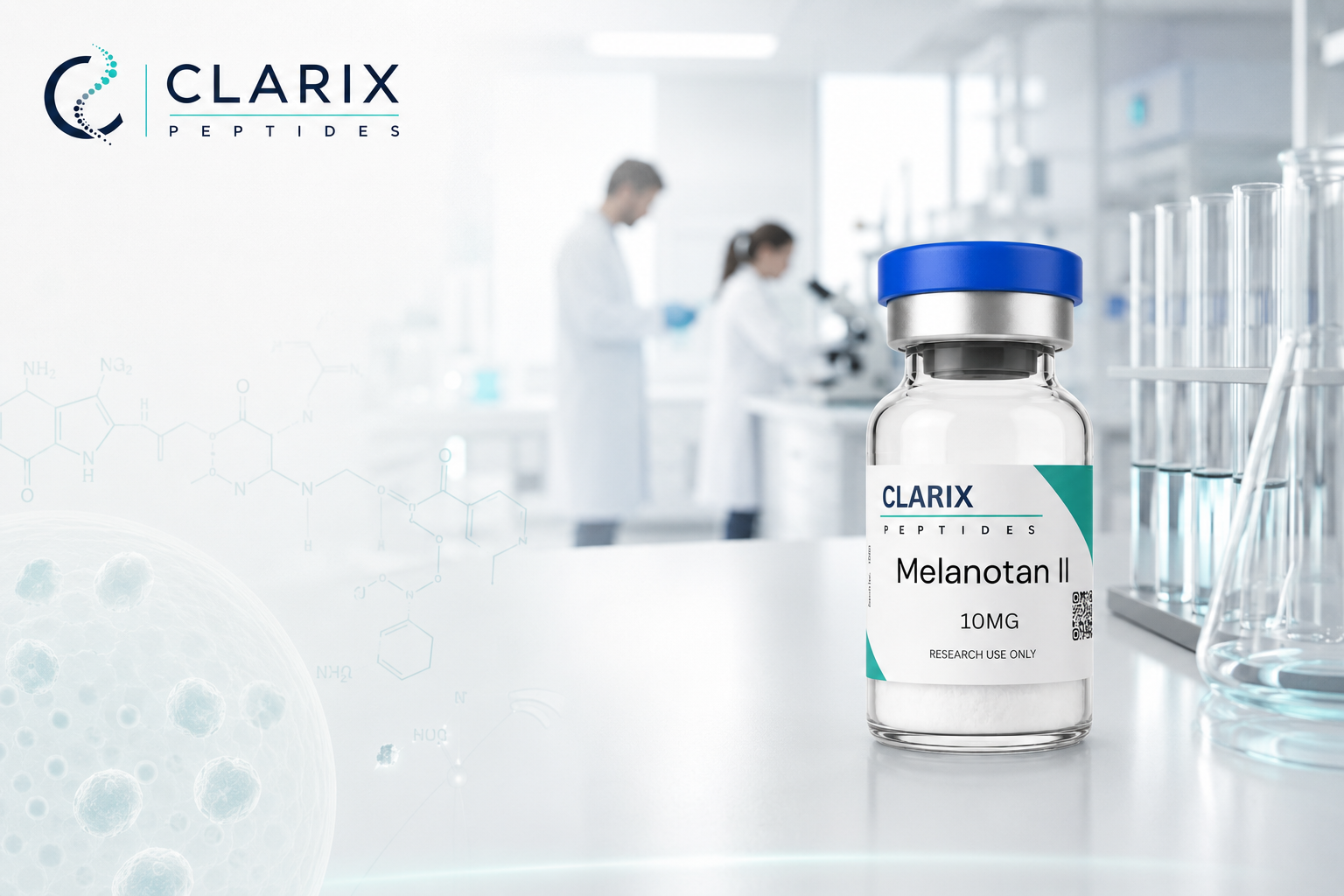
Melanotan II Available from Clarix Peptides
HPLC-verified, 99%+ purity. Certificate of Analysis included. Available in 10mg. Fast UK dispatch.
Laboratory Handling
Reconstitution
Melanotan II is typically reconstituted using bacteriostatic water for laboratory use. The compound dissolves readily at room temperature. Solutions are colourless to very slightly off-white and should be clear when properly dissolved. If the solution appears turbid after complete mixing, check the solvent pH — MT-II has improved solubility in slightly acidic conditions, and 0.1% acetic acid can be used as an alternative reconstitution solvent if needed.
Light Sensitivity and Storage
MT-II is sensitive to both UV and visible light exposure, which can cause photodegradation of the cyclic structure over time. Vials should be stored in opaque containers or wrapped in foil when not in use. For long-term storage, keep lyophilised material at minus 20 degrees Celsius. Reconstituted solutions should be refrigerated at 4 degrees Celsius, kept protected from light, and used within 28 to 30 days. Amber glass or foil-wrapped vials are recommended for any extended storage of reconstituted material.