GHK-Cu is one of the most extensively characterised naturally occurring peptide compounds in tissue biology. Unlike many research peptides that are wholly synthetic, GHK-Cu is a copper complex found in human plasma, saliva, and urine, where it plays an active role in tissue maintenance and repair signalling. This review covers the compound's structure, core research areas, and what researchers working with it should understand from a handling perspective.
What Is GHK-Cu?
GHK-Cu is the copper(II) complex of the tripeptide Glycine-L-Histidine-L-Lysine, abbreviated Gly-His-Lys. It has the molecular formula C14H22CuN6O4 and a molecular weight of 403.9 Da. The compound was first isolated from human plasma albumin in the early 1970s and has since been the subject of numerous studies examining its physiological roles in wound healing, tissue remodelling, and cellular protection.
The copper component is central to the compound's activity. Copper is an essential cofactor for several enzymes involved in connective tissue synthesis, including lysyl oxidase, which is required for the cross-linking of collagen and elastin fibres. GHK-Cu acts as a high-affinity copper transport peptide and is thought to deliver copper to tissue sites where it is needed for these enzymatic processes.
Core Research Areas
Collagen and Extracellular Matrix
Research into GHK-Cu's role in extracellular matrix biology has produced a substantial body of evidence over several decades. Studies have documented its ability to stimulate collagen synthesis in fibroblast cultures, while simultaneously promoting the production of matrix metalloproteinases (MMPs) responsible for the breakdown and remodelling of old or damaged collagen. This bidirectional effect on collagen turnover is considered central to its role in tissue remodelling, distinguishing it from compounds that simply stimulate collagen production without supporting the remodelling aspect of repair.
Fibroblast Activity and Wound Healing
GHK-Cu has a well-documented stimulatory effect on fibroblast proliferation and migration in cell culture models. Fibroblasts are the primary producers of extracellular matrix proteins, and their activation is a key step in wound healing. Research has shown that GHK-Cu application to wound models enhances the rate of wound contraction and re-epithelialisation, consistent with its fibroblast-activating properties. The compound also appears to promote the proliferation of keratinocytes, the epithelial cells that resurface wound sites.
Antioxidant Gene Expression
A distinct area of research has examined GHK-Cu's influence on gene expression profiles. Studies using microarray and transcriptome analysis have identified GHK-Cu as capable of modulating the expression of several hundred genes, including a number involved in antioxidant pathways. Upregulation of superoxide dismutase, catalase, and glutathione peroxidase activity has been associated with GHK-Cu in multiple in vitro models, suggesting a broader cellular protective role beyond direct tissue remodelling.

Skin Biology Research
Given its effects on fibroblasts, collagen, and elastin, GHK-Cu has attracted significant attention in skin biology research. Studies have examined changes in epidermal thickness, dermal collagen density, and elastin content in skin models exposed to GHK-Cu. Its ability to promote glycosaminoglycan synthesis, which contributes to dermal hydration and tissue volume, has also been documented. These properties have made it a compound of considerable interest to researchers in dermatological and cosmetic science disciplines.
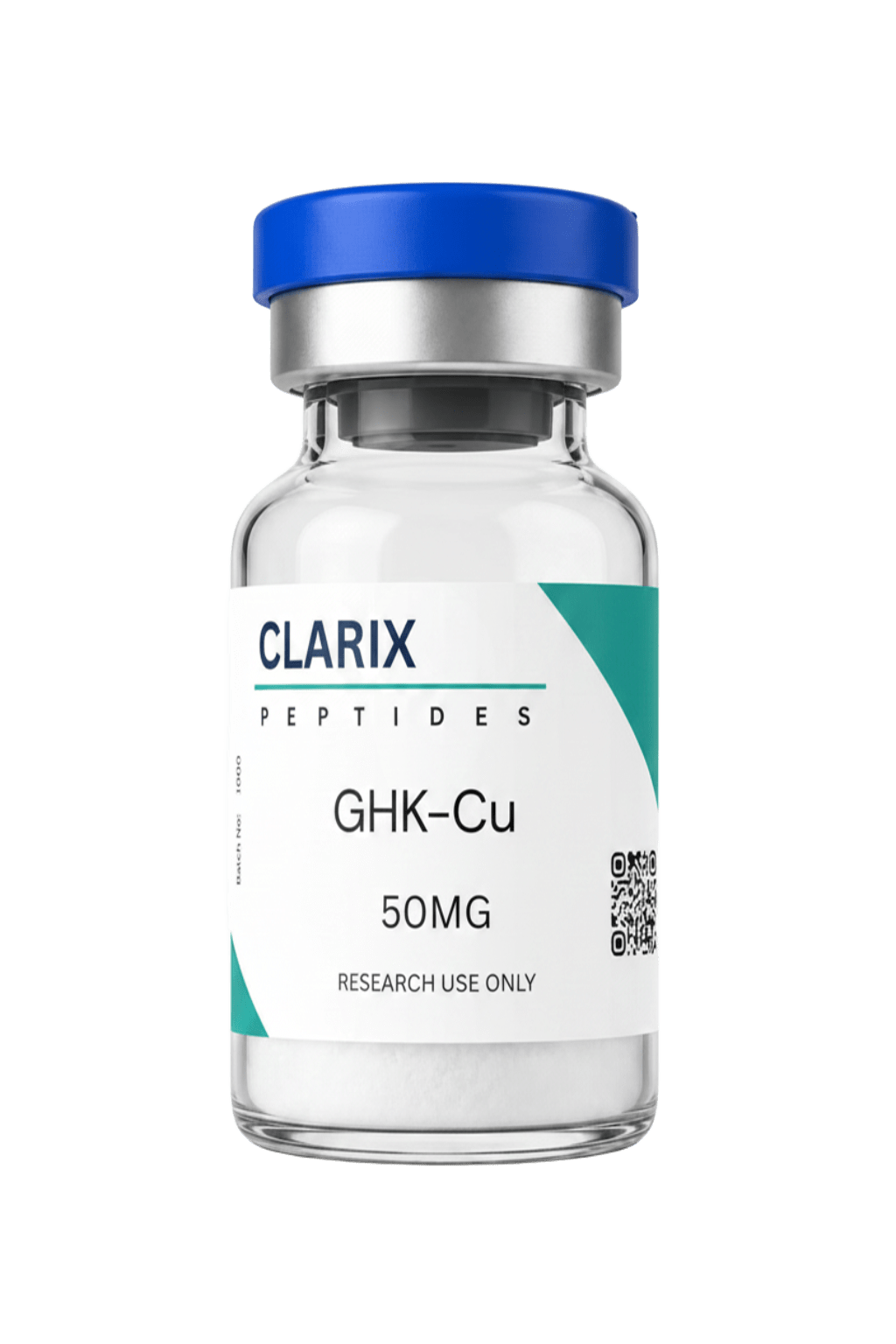
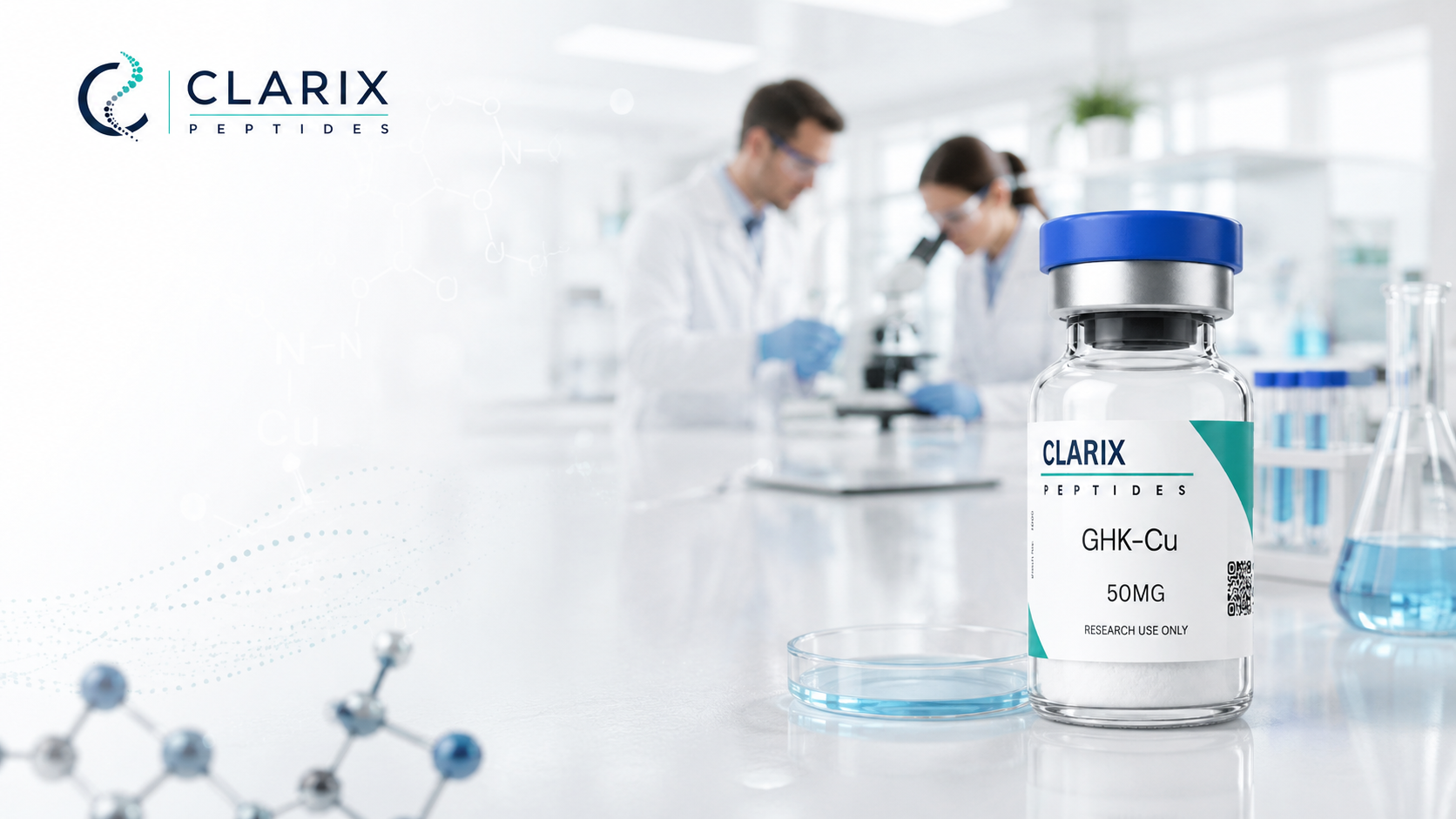
GHK-Cu Available from Clarix Peptides
HPLC-verified, 99%+ purity. Certificate of Analysis included. Available in 50mg and 100mg. Fast UK dispatch.
Laboratory Handling
Solubility
GHK-Cu dissolves readily in water due to its small size and copper-chelated structure. Sterile or bacteriostatic water is the standard solvent for research applications. At typical research concentrations the compound produces a clear, slightly blue-tinted solution — this is normal and is a result of the copper(II) component. The colour intensity increases with concentration and is not an indication of degradation.
Storage
Lyophilised GHK-Cu is stable at room temperature for short periods but should be stored at minus 20 degrees Celsius for long-term preservation. The compound is sensitive to light and should be kept in opaque or foil-wrapped containers to minimise photodegradation. Reconstituted solutions should be refrigerated at 4 degrees Celsius and used within 30 days. Unlike some larger peptides, GHK-Cu solutions are generally more tolerant of storage but should still not be subjected to repeated freeze-thaw cycles.