
Semaglutide and retatrutide represent two generations of incretin-based research tools that have generated significant interest in the metabolic disease research community. Semaglutide, a selective glucagon-like peptide-1 receptor (GLP-1R) agonist, has become one of the most extensively characterised compounds in obesity and type 2 diabetes research. Retatrutide, an experimental triple agonist targeting GLP-1R, GIPR, and GCGR simultaneously, represents the next frontier in receptor pharmacology for metabolic research. Understanding the mechanistic distinctions between these compounds is essential for researchers designing experiments and interpreting published data from either compound class.
This article provides a research-focused comparison of both molecules — their receptor pharmacology, structural features, Phase 2 clinical data, and the implications for different research models. All compounds described here are supplied strictly for in-vitro and preclinical laboratory research only and are not intended for human administration.
Semaglutide and GLP-1 Receptor Agonism
Semaglutide is a modified analogue of human glucagon-like peptide-1 (GLP-1), the endogenous incretin hormone secreted by intestinal L-cells in response to nutrient ingestion. Native GLP-1 has a plasma half-life of approximately two minutes due to rapid degradation by dipeptidyl peptidase-4 (DPP-IV) and clearance by the kidneys. Semaglutide circumvents this by two structural modifications: substitution of alanine-8 with alpha-aminoisobutyric acid (Aib), which confers DPP-IV resistance, and attachment of a C18 fatty di-acid moiety via a linker at lysine-26, which promotes non-covalent albumin binding. The result is a plasma half-life of approximately 168 hours, enabling once-weekly pharmacokinetics.
At the GLP-1 receptor — a Gs protein-coupled receptor expressed on pancreatic beta-cells, intestinal epithelium, cardiac tissue, and throughout the central nervous system — semaglutide activates adenylyl cyclase, elevates cyclic AMP, and stimulates glucose-dependent insulin secretion. In the central nervous system, particularly the arcuate nucleus of the hypothalamus, GLP-1R signalling activates pro-opiomelanocortin (POMC) neurons and suppresses neuropeptide Y/AgRP orexigenic signalling, producing meaningful reductions in caloric intake. Peripheral GLP-1R agonism also slows gastric emptying, further reducing the rate and volume of caloric absorption. These combined central and peripheral actions underpin the significant weight-reducing effects observed across the semaglutide clinical programme.
Retatrutide's Triple Agonist Architecture
Retatrutide (LY3437943), developed by Eli Lilly, is a synthetic acylated peptide engineered to engage three distinct G protein-coupled receptors simultaneously: the GLP-1 receptor (GLP-1R), the glucose-dependent insulinotropic polypeptide receptor (GIPR), and the glucagon receptor (GCGR). This tri-agonist architecture is what fundamentally separates retatrutide from semaglutide and from the earlier dual GLP-1R/GIPR agonist tirzepatide.
The GIPR component of retatrutide's pharmacology potentiates glucose-dependent insulin secretion from pancreatic beta-cells and may modulate adipocyte function through GIPR expressed on fat cells. GIP receptor agonism in combination with GLP-1R agonism has consistently produced additive effects on appetite suppression and weight loss in both preclinical models and clinical data, likely through complementary hypothalamic circuits and synergistic incretin potentiation. This dual incretin engagement alone explains why dual agonists like tirzepatide produce greater weight loss than selective GLP-1R agonists.
The GCGR component introduces a qualitatively different mechanism: glucagon receptor activation promotes hepatic glucose output, increases hepatic fat oxidation, and stimulates thermogenic pathways in brown adipose tissue. In isolation, GCGR agonism would be counterproductive in a metabolic disease context due to hyperglycaemia risk. However, in the context of concurrent GLP-1R and GIPR agonism — which provide robust glucose-lowering and insulin-stimulating effects — the net result is increased caloric expenditure and hepatic lipid clearance without the hyperglycaemic liability of unopposed glucagon receptor stimulation.
What the Glucagon Receptor Adds to Metabolic Research
The GCGR agonism in retatrutide is the key innovation distinguishing triple agonists from dual agonists in research terms. Glucagon receptor activation in the liver increases fatty acid beta-oxidation and reduces hepatic triglyceride content — mechanisms of direct relevance to researchers studying non-alcoholic fatty liver disease (NAFLD), non-alcoholic steatohepatitis (NASH), and hepatic lipid metabolism. Animal model data suggest GCGR agonism contributes to greater reductions in liver fat content than GLP-1R agonism or dual GLP-1R/GIPR agonism alone.
Additionally, brown adipose tissue expresses glucagon receptors, and GCGR agonism has been linked to increased uncoupling protein 1 (UCP1) expression and thermogenic activity. This thermogenic contribution — absent in semaglutide — may explain a meaningful portion of retatrutide's superior weight loss efficacy signals in Phase 2 data. For researchers working on energy expenditure, adipose tissue biology, or hepatic lipid metabolism, retatrutide's GCGR engagement makes it a distinct and complementary research tool relative to semaglutide.

Comparative Phase 2 Efficacy Data
The most widely referenced comparison between retatrutide and semaglutide comes from Phase 2 clinical trial data, though researchers should note these are distinct trials with different populations, dose escalation schedules, and follow-up durations.
A Phase 2 dose-finding study of retatrutide published in the New England Journal of Medicine in 2023 reported that participants randomised to the highest dose cohort (12 mg weekly) achieved a mean body weight reduction of approximately 24.2% at 48 weeks — the largest mean weight loss reported from any weekly-injection peptide-based trial at that timepoint. The 4 mg and 8 mg cohorts showed approximately 17.3% and 22.8% respectively, demonstrating clear dose-dependency.
Semaglutide data from the STEP clinical programme (STEP 1 and STEP 5) reported mean weight reductions of approximately 14.9% at 68 weeks with 2.4 mg weekly dosing in adults with obesity. Tirzepatide — the dual GLP-1R/GIPR agonist — demonstrated up to approximately 20.9% mean weight loss at 72 weeks in the SURMOUNT-1 trial at the highest dose. These figures broadly suggest a mechanistic hierarchy: single GLP-1R agonism (semaglutide) < dual GLP-1R/GIPR (tirzepatide) < triple GLP-1R/GIPR/GCGR (retatrutide).
Structural Differences
Semaglutide is a 31-amino acid peptide built on the native GLP-1(7-37) backbone with the Aib-8 substitution and the albumin-binding C18 fatty diacid moiety at Lys-26. This architecture confers high selectivity for GLP-1R with minimal activity at GIPR or GCGR.
Retatrutide is a 36-amino acid acylated peptide with a distinct molecular architecture designed to achieve balanced, pharmacologically relevant potency across all three target receptors simultaneously. The synthesis challenge is substantially greater than for single-agonist analogues; achieving the correct relative potency ratio at GLP-1R, GIPR, and GCGR required extensive structural optimisation. The result is a compound with a distinct immunogenicity profile, different albumin-binding characteristics, and receptor selectivity ratios that differ markedly from semaglutide.
These structural distinctions have practical implications for research: antibody cross-reactivity between semaglutide and retatrutide should not be assumed, and assay systems validated for semaglutide quantification will not necessarily transfer to retatrutide without revalidation.
Side Effect Profile Comparison in Research Contexts
Both semaglutide and retatrutide share the GI adverse event profile characteristic of GLP-1R agonism: nausea, vomiting, diarrhoea, and constipation. These effects are dose-dependent and predominantly occur during dose escalation. In Phase 2 retatrutide data, GI adverse events were reported as mild to moderate in severity and consistent with what is observed with other GLP-1R-based compounds.
Retatrutide's GCGR agonism introduces potential for additional considerations, including theoretical impacts on heart rate (glucagon has chronotropic effects) and liver enzyme levels. Semaglutide's safety and tolerability profile is extensively characterised through the multi-thousand-patient STEP programme and substantial post-marketing pharmacovigilance data. Retatrutide's broader safety characterisation awaits completion of Phase 3 trials.
Researchers designing experiments with either compound should review the full safety data from primary publications before establishing experimental protocols. Neither compound is intended for human or veterinary administration outside of licensed clinical trial settings.
Research Applications: Choosing Between the Two Compounds
For researchers focused on GLP-1R pathway biology, insulin secretion, or central appetite regulation, semaglutide remains the reference GLP-1R agonist with the largest published literature base and the widest range of validated assay systems. Its single-receptor selectivity makes it ideal for experiments that need to isolate GLP-1R-specific effects.
For studies targeting visceral adiposity, hepatic lipid metabolism, brown adipose tissue thermogenesis, or the additive effects of multi-receptor incretin engagement, retatrutide's additional GIPR and GCGR activity makes it a valuable complementary research tool. Researchers can also use semaglutide as a GLP-1R reference arm alongside retatrutide as the triple agonist arm in comparative mechanistic studies — an approach that would allow isolation of the GIPR and GCGR contributions to any observed effect.
Frequently Asked Questions
How does retatrutide differ from semaglutide mechanistically?
Semaglutide is a selective GLP-1 receptor agonist that modulates insulin secretion, gastric emptying, and central appetite signalling via a single receptor. Retatrutide engages three receptors simultaneously — GLP-1R, GIPR, and GCGR. The additional GIPR engagement potentiates insulin secretion and hypothalamic appetite suppression. The GCGR engagement adds hepatic fat oxidation and thermogenic activity. These mechanisms are entirely absent in semaglutide, making retatrutide mechanistically distinct and not simply a more potent version of the same compound.
What weight loss data exists for retatrutide vs semaglutide?
Published Phase 2 data (NEJM, 2023) showed retatrutide at 12 mg weekly achieved approximately 24.2% mean body weight reduction at 48 weeks. Semaglutide at 2.4 mg weekly in the STEP 1 trial showed approximately 14.9% mean weight loss at 68 weeks. These figures come from separate trials with different designs; direct comparison is not methodologically valid. A mechanistic hierarchy is suggested but awaits confirmation from head-to-head trials.
Is retatrutide stronger than semaglutide?
Phase 2 data suggests retatrutide produces greater body weight reduction than semaglutide, likely due to the additive contributions of GIPR and GCGR engagement alongside GLP-1R agonism. However, "stronger" is an imprecise descriptor in pharmacological research. The compounds have different receptor profiles and act through distinct mechanisms; the greater weight loss signal with retatrutide reflects its broader mechanism of action rather than simply higher potency at a shared receptor. No published head-to-head RCT yet confirms superiority.
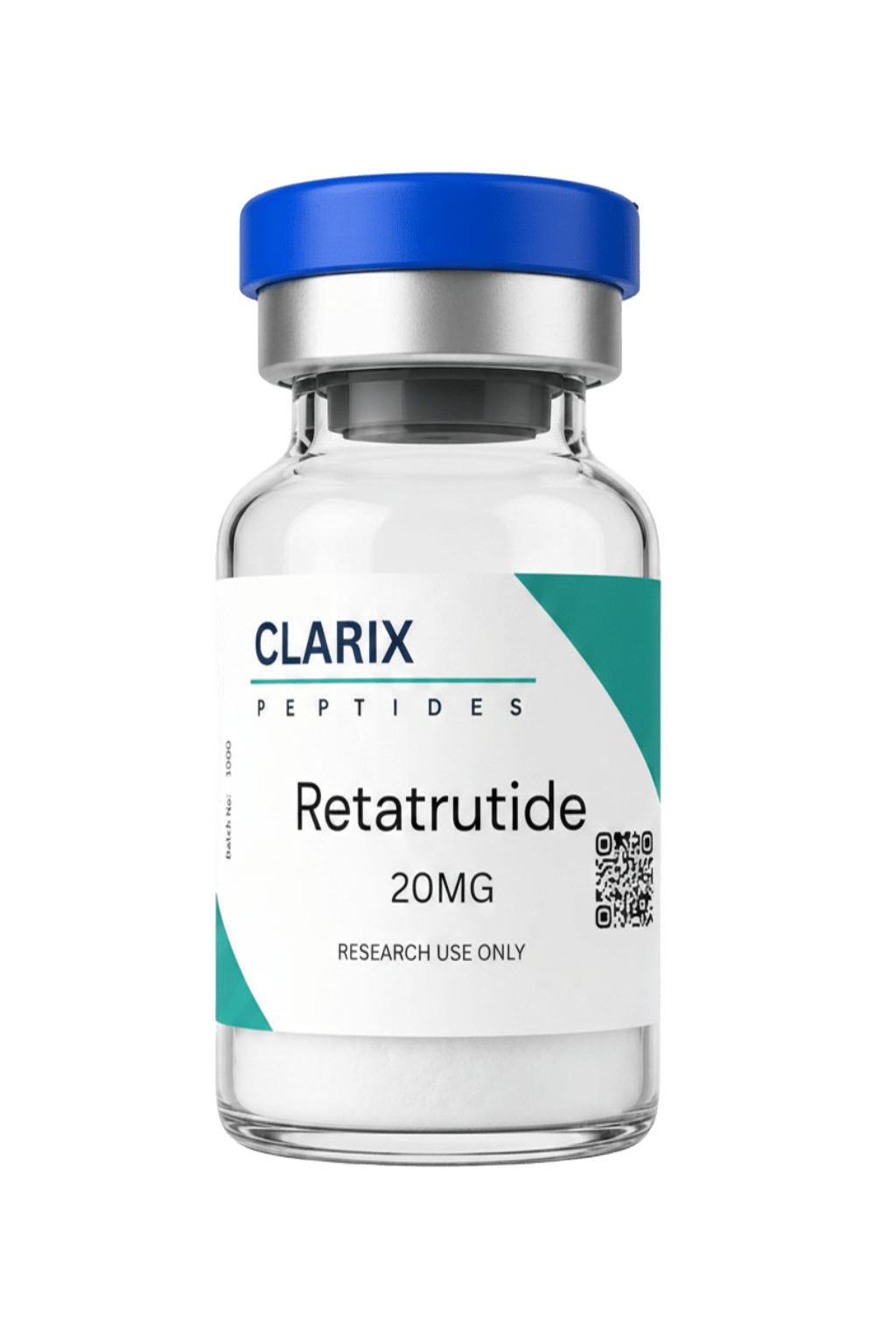
Retatrutide 10mg — Research Grade
HPLC-verified, 99%+ purity. Third-party COA included with every batch. UK dispatch. For research use only.